Liposuction, an arm lift or a body lift changes the shape and contours of a specific area of the body. However, the new silhouette alone does not determine the overall aesthetic result. The condition, elasticity and structure of the skin also influence how harmoniously the tissue adapts to the newly created contours.
For selected patients, Morpheus8™ can therefore be integrated as a complementary treatment within a plastic surgery plan. Depending on the procedure and the individual starting point, treatment may be performed directly during surgery or at a later stage once wound healing is complete.
Morpheus8™ does not replace liposuction or surgical skin removal. It has a different objective: to stimulate targeted regenerative processes within the tissue and thereby support skin quality as part of the overall treatment concept.
Key Points at a Glance
- Morpheus8™ may be used during selected surgical procedures or later, once the healing phase is complete.
- Surgery changes shape and contours, while Morpheus8™ focuses additionally on skin structure and tissue quality.
- Whether the combination is appropriate depends on skin elasticity, the type of procedure, the treatment area, wound healing and the individual treatment objective.
What Dr. Mara Ostrerova Says About Combining Morpheus8™ With Plastic Surgery
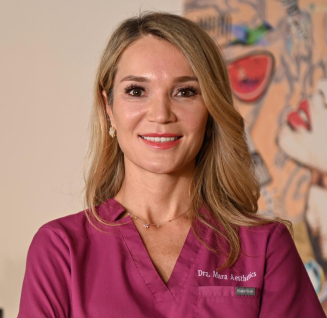
“With a modern body-contouring concept, we do not focus solely on fatty tissue and body contours. Skin quality also plays an important role. For suitable patients, Morpheus8™ can be a valuable complementary treatment. However, a thorough examination, realistic objectives and an individually tailored treatment plan are essential.”
Dr. Mara Ostrerova
Table of Contents
- ➜ What Morpheus8™ Can Achieve as Part of a Surgical Procedure
- ➜ Surgery and Skin Quality: Two Different Treatment Objectives
- ➜ How Morpheus8™ Works
- ➜ Morpheus8™ During Surgery
- ➜ Morpheus8™ After Plastic Surgery
- ➜ Complementary Treatment for Liposuction
- ➜ Morpheus8™ With an Arm Lift
- ➜ Use With Neck Lifts and Body Lifts
- ➜ Who May Be Suitable for the Combined Treatment
- ➜ Limitations and Potential Risks
- ➜ Frequently Asked Questions
- ➜ Consultation at Mara Aesthetics
What Can Morpheus8™ Achieve as Part of a Surgical Procedure?
Plastic surgery procedures and radiofrequency microneedling have different purposes. Liposuction reduces localised fat deposits and reshapes body contours. An arm lift, neck lift or body lift removes excess tissue and changes the shape of the treated area.
Morpheus8™, by contrast, targets the skin and the underlying tissue layers. The technology combines fine microneedles with fractional bipolar radiofrequency energy. This creates controlled thermal stimulation at previously defined tissue depths.
These targeted stimuli may initiate tissue-remodelling processes and support the production of new collagen and elastin. The results do not develop immediately after treatment but gradually over the following weeks and months. Treatment objectives may include:
- supporting skin firmness,
- improving uneven skin texture,
- promoting new collagen formation,
- supporting the skin as it adapts to newly created contours,
- complementary treatment of mild to moderate skin laxity.
The effects that can realistically be achieved depend on factors such as the initial condition, treatment area, skin thickness, existing elasticity and selected treatment parameters.
Surgery and Skin Quality Are Two Different Treatment Objectives
Following liposuction or a body lift, the body begins a natural adaptation and healing process. Swelling gradually subsides, the tissue stabilises and the skin progressively adapts to the newly shaped body contour.
The degree to which the skin adapts differs from one person to another. Relevant factors may include:
- age and genetic predisposition,
- skin thickness and tissue quality,
- the degree of existing skin laxity,
- the amount of fat removed,
- previous pregnancies,
- significant changes in body weight,
- nicotine use and general health.
Surgery can remove significant amounts of excess skin and alter the anatomical shape of a treatment area. Morpheus8™ cannot replace this type of surgical correction. However, in cases involving milder tissue changes or when used as a complementary measure, the technology may be incorporated into the overall treatment concept.
The Central Question
The central question is therefore not whether Morpheus8™ is generally “better” than surgery. The decisive factor is which method is required for the specific treatment objective.
How Does Morpheus8™ Work?
Morpheus8™ is a fractional radiofrequency microneedling treatment. During treatment, fine needles penetrate the tissue in a controlled manner. Radiofrequency energy is then delivered through the needle tips at previously defined depths.
The combination of microneedling and heat creates targeted coagulation zones within the tissue. These controlled stimuli activate the body’s natural repair and remodelling processes. They may also stimulate fibroblasts, which are cells involved in the production of collagen and elastin.
With Morpheus8™ Burst on the IgniteRF platform, different treatment depths and energy levels can be adjusted according to the treatment area and objective. The BURST function enables energy to be delivered at several tissue levels within a single treatment pulse.
The selection of penetration depth and energy level is particularly important. The face, neck, upper arms, abdomen and thighs all have different anatomical structures and skin thicknesses. Settings must therefore not simply be transferred from one area of the body to another.
Contact Us
Why Can Morpheus8™ Be Used During Surgery?
Many patients are familiar with Morpheus8™ as a standalone treatment performed in a medical practice. However, when clinically appropriate, it may also be used intraoperatively, meaning during the same treatment session as the plastic surgery procedure.
The advantage lies in the coordinated treatment plan. While the surgical procedure reduces fatty tissue, removes excess skin or reshapes a specific area of the body, Morpheus8™ may additionally target skin and tissue quality.
If the patient is already under the anaesthesia or sedation required for surgery, a separate anaesthetic session is generally not necessary for the complementary treatment. However, this does not mean that Morpheus8™ should automatically be used with every operation.
Before intraoperative treatment, the following factors must be considered:
- the type and extent of surgery,
- the position of the planned surgical incisions,
- the thickness and condition of the tissue,
- the anatomical treatment area,
- the selected form of anaesthesia,
- individual risk factors,
- the anticipated healing process.
Studies and specialist surgical publications have described the combined use of radiofrequency microneedling and liposculpture in selected patients. However, the available evidence cannot automatically be applied to every operation, every area of the body or every medical device.
Morpheus8™ After Plastic Surgery
Not every complementary Morpheus8™ treatment needs to be performed during surgery. In some cases, treatment at a later stage may be more appropriate.
Following plastic surgery, the tissue initially needs time to heal. Swelling, bruising and feelings of tightness are not unusual during the early recovery phase. The final result of liposuction or a lifting procedure can often only be evaluated after several weeks or months.
Postoperative Morpheus8™ treatment can therefore only be considered once the healing process allows it. The appropriate timing depends on the type of surgery, the treatment area, the condition of the scars, any remaining swelling and the patient’s individual wound healing.
A fixed time frame is not appropriate for every patient. Before treatment, we assess:
- whether the surgical wounds have healed completely and without irritation,
- whether significant swelling is still present,
- how the skin has adapted to the new contours,
- which areas would genuinely benefit from additional treatment,
- whether there are medical reasons not to perform radiofrequency treatment.
The objective is not to perform treatment prematurely or indiscriminately over areas that are still healing. Any postoperative application must be carefully coordinated with the recovery plan for the preceding surgery.
Morpheus8™ as a Complement to Liposuction
Liposuction is suitable for the targeted reduction of localised fat deposits. Commonly treated areas include the abdomen, waist, flanks, upper arms, thighs, knees and the area beneath the chin.
Liposuction changes volume and body contours. The way the skin subsequently adapts to the new shape depends significantly on its elasticity.
When skin elasticity is good, the tissue may adapt relatively evenly. If mild to moderate skin laxity is already present before surgery, the result requires more differentiated planning. In these cases, Morpheus8™ may be used as a complementary treatment to support tissue structure and collagen remodelling.
The combination may be particularly relevant when there is no significant excess skin but the skin has already lost a degree of firmness.
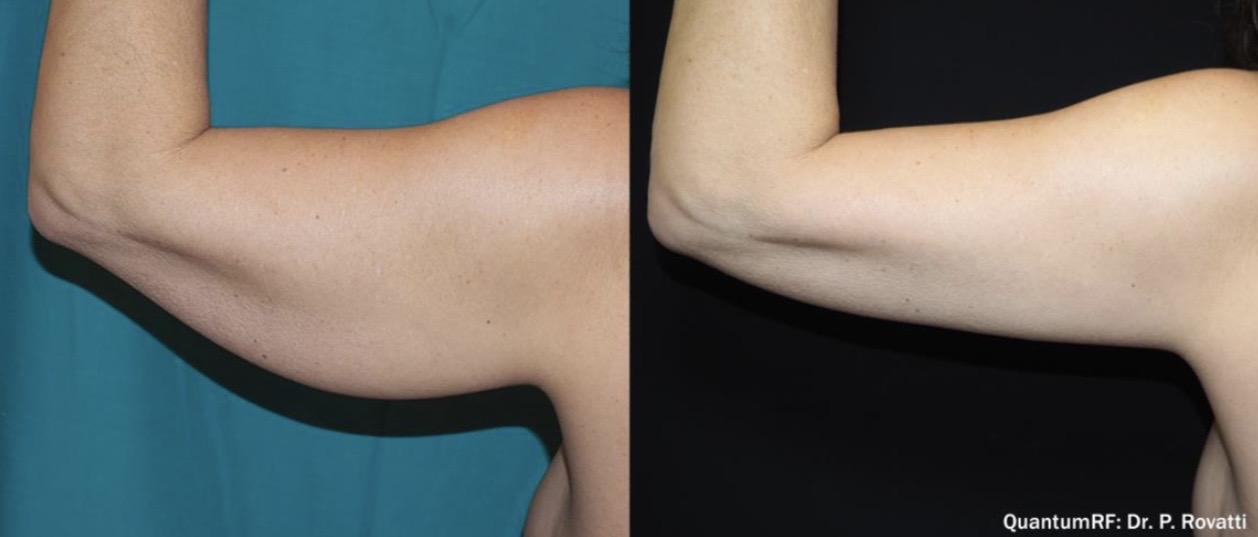
Morpheus8™ With an Arm Lift
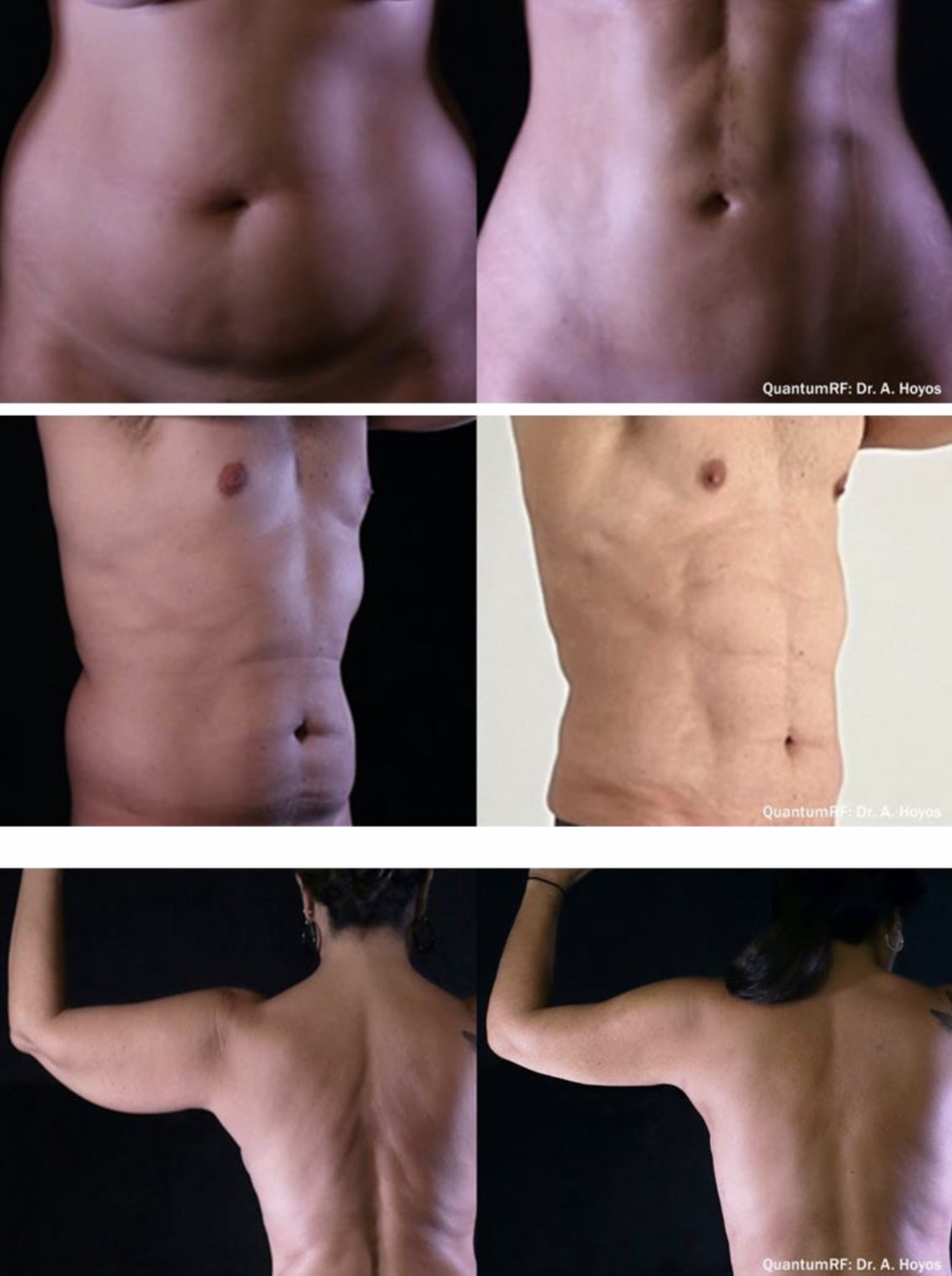
The upper arms are particularly susceptible to the effects of ageing and significant weight loss. As elasticity decreases, the skin on the inner upper arms may become increasingly loose.
During a surgical arm lift, excess skin is removed and the contour of the upper arm is reshaped. Depending on the patient’s starting point, the procedure may be combined with liposuction.
Morpheus8™ may be used as a complementary treatment when the condition of the remaining skin is to be addressed alongside the surgical correction. Treatment can be planned to stimulate regenerative remodelling processes and support skin texture in selected areas.
The placement of surgical scars and the freshly operated tissue must be considered with particular care. Whether treatment is performed intraoperatively or only after complete healing is therefore determined individually.
Morpheus8™ With Neck Lifts and Body Lifts
Skin quality can also influence the result of lifting procedures involving the neck, abdomen, back or thighs.
A neck lift treats pronounced tissue laxity and changes the contours between the chin, jawline and neck. In appropriate cases, Morpheus8™ may be used as a complementary treatment on adjacent areas of skin. Because sensitive anatomical structures run through the neck and the skin may be comparatively thin, detailed anatomical knowledge and careful selection of treatment parameters are essential.
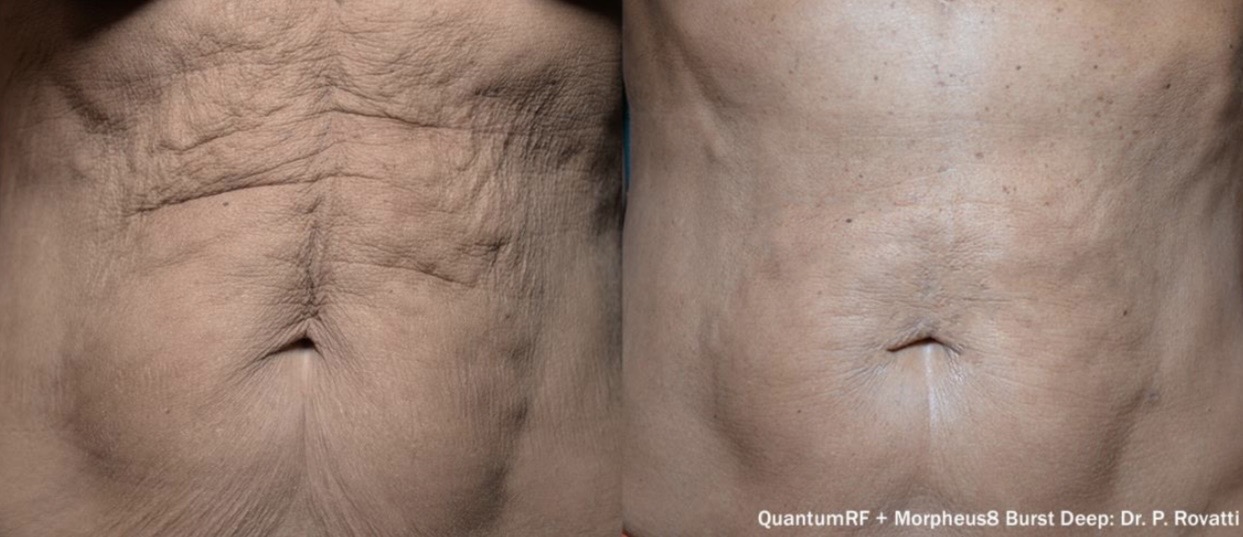
Body-lifting procedures often focus on the removal of significant amounts of excess skin following pregnancy or substantial weight loss. Morpheus8™ does not replace this surgical removal. However, treatment may be used to include selected areas with milder residual laxity or uneven skin texture within the overall treatment concept.
Possible treatment areas include:
- the abdomen and flanks,
- the upper arms,
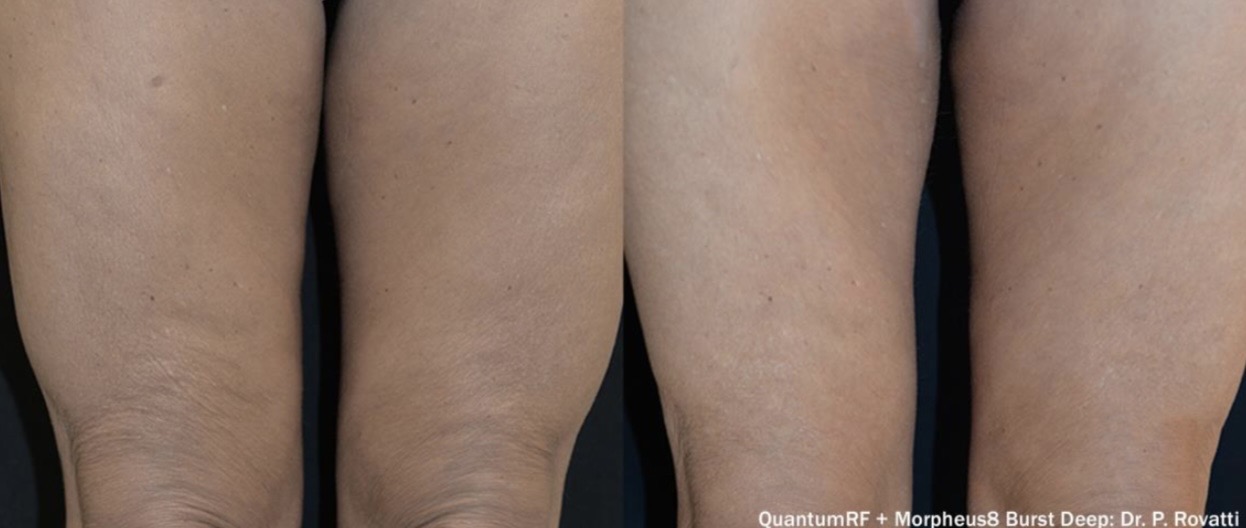
- the thighs,
- the back,
- the neck and jawline.
Not every area is treated using the same penetration depth or energy level. The parameters must be adapted to skin thickness, fatty tissue, anatomy and the surgical technique being used.
- Read More About Abdominoplasty
- Read More About Body Lifts
- Read More About Breast Lifts
- Read More About Arm Lifts
- Read More About Thigh Lifts
Who Is Suitable for a Combination of Body Contouring and Morpheus8™?
A combined treatment may be considered for patients who are planning surgical body-contour improvement and also have mild to moderate loss of skin firmness.
This may include people who:
- are planning liposuction of the abdomen, flanks, arms or thighs,
- are undergoing a surgical arm lift,
- are planning a neck lift or body lift,
- have noticed changes in skin texture following weight loss,
- have visible but not severe skin laxity,
- would like skin quality to be considered as part of their surgical plan.
A general recommendation cannot be made. Before treatment, the condition of the skin, tissue thickness, surgical objective and relevant health factors must be assessed by a qualified doctor.
Expectations also play an important role. Morpheus8™ may support regenerative processes, but it cannot create an unlimited degree of tightening or guarantee a particular aesthetic result.
When Is Morpheus8™ Not an Appropriate Complementary Treatment?
Certain medical conditions, active skin disorders, infections or possible wound-healing problems may make treatment unsuitable.
Particular caution is also required in recently operated areas. Surgical incisions, scars, swelling and the blood supply to the tissue must be medically assessed before postoperative treatment is performed.
Morpheus8™ should therefore not be understood as a standard addition to every operation. It is one possible treatment option within an individually planned overall concept.
Risks and Safety of Radiofrequency Microneedling
Morpheus8™ is a medical treatment. Its application requires an understanding of anatomy, different tissue depths, energy settings and individual risk factors.
Possible temporary reactions include redness, swelling, tenderness, small crusts or pinpoint bleeding. The intensity of these reactions may vary according to the treatment strength and area of the body.
Serious complications, including burns, scarring, unwanted loss of fatty tissue and nerve damage, have also been reported in connection with RF microneedling. The US Food and Drug Administration therefore emphasises that RF microneedling should be regarded as a medical procedure and performed only by appropriately qualified practitioners.
Selecting the correct penetration depth and energy level is especially important when treatment is performed during or after surgery. A higher treatment intensity does not automatically produce a better result.
When Do Changes Become Visible?
The tissue processes stimulated by Morpheus8™ require time. Initial changes in skin texture may become noticeable over the following weeks. Collagen remodelling then continues over a longer period.
At the same time, the result of the surgical procedure also continues to change. Swelling subsides, the tissue becomes softer and the new body contours gradually stabilise.
For this reason, the result of a combined treatment should not be assessed immediately after the procedure. The exact progression depends on the operation, treatment area, individual healing process and the Morpheus8™ protocol used.
Whether a single treatment is sufficient or further sessions should be planned at a later stage is determined according to the patient’s progress.
Frequently Asked Questions About Morpheus8™ and Plastic Surgery
Can Morpheus8™ Be Performed During Liposuction?
Yes. In selected patients, Morpheus8™ may be performed during the same session as liposuction. The treatment must be medically appropriate and carefully coordinated with the surgical procedure, treatment area and individual anatomy.
Can Morpheus8™ Replace Surgical Skin Removal?
Generally not when significant excess skin is present. Morpheus8™ may be considered for mild to moderate skin laxity. Larger amounts of excess skin often need to be removed surgically.
Is Treatment During Surgery Better Than Treatment at a Later Stage?
Not necessarily. Intraoperative treatment may offer organisational and treatment-planning advantages. For other patients, it may be more appropriate to wait for healing and skin adaptation before assessing whether additional treatment is needed.
When Can Morpheus8™ Be Performed After Surgery?
The appropriate timing depends on the procedure, treatment area and healing process. Surgical wounds, scars, swelling and the overall tissue condition must first be assessed by a doctor. A universally applicable number of weeks cannot therefore be specified.
Can Morpheus8™ Also Be Used to Treat Scars?
Radiofrequency microneedling may be used to improve skin texture in certain types of scars. However, fresh surgical scars must not be treated without a prior medical examination. The timing, penetration depth and energy level must be planned separately.
Is Additional Downtime Expected After a Combined Treatment?
The recovery period is primarily determined by the surgical procedure. Morpheus8™ may cause additional skin reactions such as redness, swelling or small crusts. The necessary aftercare depends on the procedure and treatment intensity.
Which Areas of the Body Can Be Treated With This Combination?
Possible areas include the abdomen, flanks, upper arms, thighs, back, neck and jawline. Whether treatment is medically appropriate and beneficial is assessed separately for each area.
Individual Treatment Planning at Mara Aesthetics
At Mara Aesthetics, surgery and complementary skin treatments are not regarded as unrelated procedures. The decisive factor is which treatment is genuinely required for the individual tissue condition.
Before planning a combined treatment, we assess:
- existing skin elasticity,
- the extent and location of fatty deposits,
- possible excess skin,
- tissue thickness and anatomical characteristics,
- the planned surgical technique,
- the positioning of incisions and expected scars,
- relevant health factors,
- the desired and realistically achievable result.
On this basis, we determine whether Morpheus8™ should be performed during surgery, at a later stage or not at all.
Our objective is not to offer a standardised treatment package. The focus is on a medically sound concept that brings body contours, skin quality and patient safety into alignment.
You can find further information about the technology, possible treatment areas and the general procedure on our Morpheus8™ treatment page.
Personal Consultation for Surgery and Morpheus8™
Are you planning liposuction, an arm lift or a body lift and would like to know whether Morpheus8™ could be considered as a complementary treatment?
During a personal consultation, we examine the relevant area of the body and discuss which procedure is appropriate for your individual starting point. We also determine whether intraoperative treatment may be beneficial or whether reassessment after the healing phase would be the more appropriate approach.
Arrange your personal consultation at Mara Aesthetics.
Please note: Every medical treatment involves potential risks. The information provided here does not replace a personal medical examination and consultation. Treatment options and results vary according to individual circumstances.