By Dr Mariana Ostrerova (Dra. Mara), specialist in plastic and aesthetic surgery in Palma de Mallorca · Medically reviewed on 24 November 2026 · Last updated on 24 November 2026
Key points at a glance
- Jowls form when cheek tissue descends and gathers along the jawline, caused by volume loss, lax ligaments and thinner skin.
- Face yoga, massage and creams care for the skin but cannot lift descended tissue.
- Mild jowls can be visibly improved with jawline contouring or Morpheus8™; the effect is temporary.
- Once tissue has clearly descended, only a facelift or deep plane facelift lifts it in a longer-lasting way.
The right option depends on a personal examination by a specialist in plastic and aesthetic surgery.
Contents
- ➜ What are jowls?
- ➜ Why do jowls develop?
- ➜ How to get rid of jowls: all options explained
- ➜ Jowl treatments compared
- ➜ When does a facelift make sense for jowls?
- ➜ What to expect from a facelift with Dr Mara in Mallorca
- ➜ Facelift in Mallorca: why patients choose Palma
- ➜ Risks of a facelift
- ➜ Frequently asked questions about jowls
Key facts
| Topic | Details |
|---|---|
| Topic | Jowls and a sagging jawline |
| Without surgery (mild) | hyaluronic acid/Radiesse®, Morpheus8™, radiofrequency microneedling |
| With surgery (pronounced) | mini/MACS facelift, SMAS facelift, deep plane facelift |
| Facelift duration | about 3 to 5 hours, depending on extent |
| Anaesthesia | general anaesthesia or sedation |
| Hospital stay | usually 1 to 2 nights |
| Back to social life | after about 2 to 3 weeks |
| Flying after facial surgery | not before 7 to 10 days (NHS advice) |
| Consultation and aftercare | Mara Aesthetics, Via Roma 6, Palma de Mallorca |
What are jowls?
Jowls are the small pads of tissue that develop over the years along the lower jaw, on either side of the chin. They break up the clean line of the jaw. Many people first notice them in photos taken from the side or when looking down at their phone.
Jowls are not a sign of poor skincare. They are a natural part of how the lower face ages, affect both women and men, and some people start to notice them in their late thirties.
Why do jowls develop?
The face is built in layers: skin, fat, a supportive fibromuscular layer known as the SMAS, and retaining ligaments that anchor everything to the bone. With age, all of these layers change at the same time:
- The skin loses collagen and elasticity and becomes thinner.
- The fat pads of the cheeks lose volume and descend.
- The SMAS and the retaining ligaments become lax.
- Along the jaw, a firm ligament stops the descending tissue. It gathers there and becomes visible as a jowl.
In some people volume loss is the main issue, in others the fat pads have shifted downwards, and in others there is additional fat over the jawline (Reece and Rohrich, Aesthetic Surgery Journal 2008). This distinction is exactly what determines which treatment makes sense.
Genetics, significant weight changes, sun exposure and smoking can all speed up the process.
How to get rid of jowls: all options explained
Honestly assessed, the options fall into three groups: things you can do at home, non-surgical treatments and surgery.
Face yoga, massage and creams
Facial exercises, massage and firming creams can make skin feel better and many people enjoy them. They cannot lift tissue that has already descended. What does help in the long term is protecting your skin: daily sun protection, a stable weight and not smoking.
Hyaluronic acid and Radiesse®: rebuilding the contour
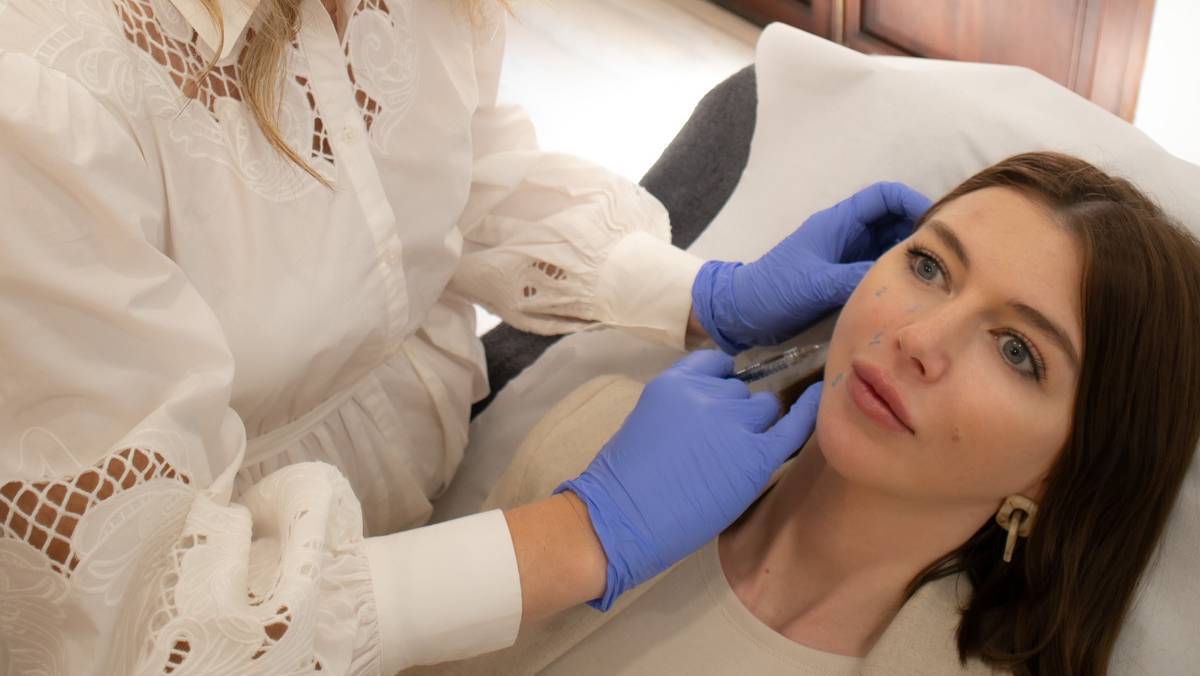
With jawline contouring, the jaw is shaped using a firm hyaluronic acid filler, often combined with Radiesse®. This can smooth the transition between chin and jowl and make the contour look sharper straight away. Fillers replace lost volume and improve light and shadow. They do not lift descended tissue, and too much volume can make the face look heavier rather than fresher. Hyaluronic acid is gradually broken down by the body, so treatment needs to be repeated.
Radiofrequency microneedling and Morpheus8™
Treatments such as Morpheus8™ or radiofrequency microneedling deliver controlled heat to deeper layers of the skin. The skin becomes firmer and smoother, which can make the jawline look more defined in cases of mild laxity. Several sessions are usually planned and the effect builds up over weeks.
Fat transfer
If the midface has lost volume, fat transfer can restore fullness to the cheeks, which also takes visual weight off the jawline. Fat transfer is often combined with a facelift: the fat restores volume, the lift repositions the tissue.
Facelift and deep plane facelift
A facelift works exactly where jowls develop: on the SMAS and the retaining ligaments. In an SMAS facelift this layer is tightened. In a deep plane facelift, skin and SMAS are released together and moved back to their original position as one unit. The jawline is not “pulled”; the tissue is returned to where it used to be. The result lasts much longer than non-surgical treatments, although natural ageing continues.
Jowl treatments compared
| Treatment | What it does | Best suited to | Good to know |
|---|---|---|---|
| Hyaluronic acid / Radiesse® | restores contour and volume | mild jowls, volume loss | visible immediately, needs repeating, does not lift |
| Morpheus8™ / radiofrequency | firms the skin | mild laxity, uneven skin texture | usually several sessions, gradual effect |
| Fat transfer | replaces volume | hollow cheeks | often combined with a lift |
| Facelift / deep plane facelift | repositions descended tissue | pronounced jowls, soft jaw and neckline | surgery with recovery time, long-lasting result |
When does a facelift make sense for jowls?
A facelift may be worth considering if
- your jawline is clearly interrupted from the front and from the side,
- gently lifting the skin with your fingers visibly moves the tissue back into place,
- your cheeks, the corners of your mouth or your neck have also lost firmness,
- fillers no longer give the result you want or make your face look too full,
- you would prefer a long-lasting result to regular repeat treatments.
A simple rule of thumb: if volume is missing, volume and skin treatments help. If tissue has descended, it needs lifting. Many faces show both, and then a combination is often the best approach.
Mini facelift, SMAS or deep plane?
For early jowls and good skin, a smaller lift such as a MACS or mini facelift may be enough. For pronounced laxity of the cheeks, jawline and neck, an SMAS or deep plane facelift offers more. Our article Modern deep plane facelift abroad explains how the techniques differ and how recovery works. You can see examples in Deep plane facelift before and after.
What to expect from a facelift with Dr Mara in Mallorca
- Consultation: Dr Mara takes time to assess your face, including skin, volume, jawline and neck. She tells you honestly which option suits you and when a non-surgical treatment is enough.
- Surgery: The procedure takes place in a clinic in Palma, usually under general anaesthesia or sedation. Depending on the extent, it takes about three to five hours, and most patients stay one or two nights.
- First days: Swelling, bruising and a feeling of tightness are normal and settle gradually. A head dressing and cooling support healing.
- Back to social life: Many patients feel comfortable being out and about again after around two to three weeks. The final result develops over several months.
- Aftercare: Follow-up appointments take place in person at the practice in central Palma.
Facelift in Mallorca: why patients choose Palma
Many patients from the UK, the USA, Germany, Austria and Switzerland combine their surgery with a calm recovery on the island. Short and direct flights, treatment within the European Union and consultations and aftercare in English and German make planning easier. Dr Mariana Ostrerova is a specialist in plastic and aesthetic surgery. Before founding her practice in Palma, she worked as a senior consultant at St. Agatha Hospital in Cologne, Germany. She is a member of ISAPS, the German Society of Plastic, Reconstructive and Aesthetic Surgeons (DGPRÄC) and the Spanish Society of Plastic Surgery (SECPRE).
Important for your travel plans: you should not fly home too soon after facial surgery. The NHS advises waiting seven to ten days after facial cosmetic procedures before flying (NHS: Cosmetic surgery abroad). We plan your personal timeline together during the consultation. For more tips, read Is travelling to Spain for plastic surgery safe?
Risks of a facelift
A facelift is surgery. Typical, mostly temporary effects include swelling, bruising and numbness in front of the ears, which can last from a few weeks to several months. Less common are bleeding, infection, delayed wound healing, noticeable scars, asymmetry or irritation of the facial nerves. Smoking and blood-thinning medication increase the risk. Dr Mara discusses all risks with you in detail before you decide.
Frequently asked questions about jowls
Mild jowls can often be visibly improved with fillers or radiofrequency. Once the tissue has clearly descended, it cannot be lifted back without surgery.
Exercises can train the muscles and feel good, but they cannot lift descended fat pads or lax connective tissue.
This varies a lot. Genetics, skin quality, weight and lifestyle all play a role. Some people notice the first signs in their late thirties, others much later.
Botulinum toxin can relax the muscles that pull the corners of the mouth downwards, which can make the lower face look a little softer. It does not remove jowls themselves.
A facelift does not stop the clock, but it turns it back. Results can last many years. How long exactly depends on skin type, age, lifestyle and the technique used.
Costs depend on the method and the extent of treatment. You will receive a precise estimate after your examination during the consultation. General information is available on our facelift in Mallorca page.
Personal consultation in Palma
Whether fillers or a facelift will help you most can only be judged reliably during an examination. At our practice in central Palma, Dr Mara takes time to answer your questions and gives you honest advice, even if a smaller treatment is enough. Book your appointment via our contact page, by phone or via WhatsApp.
About the author
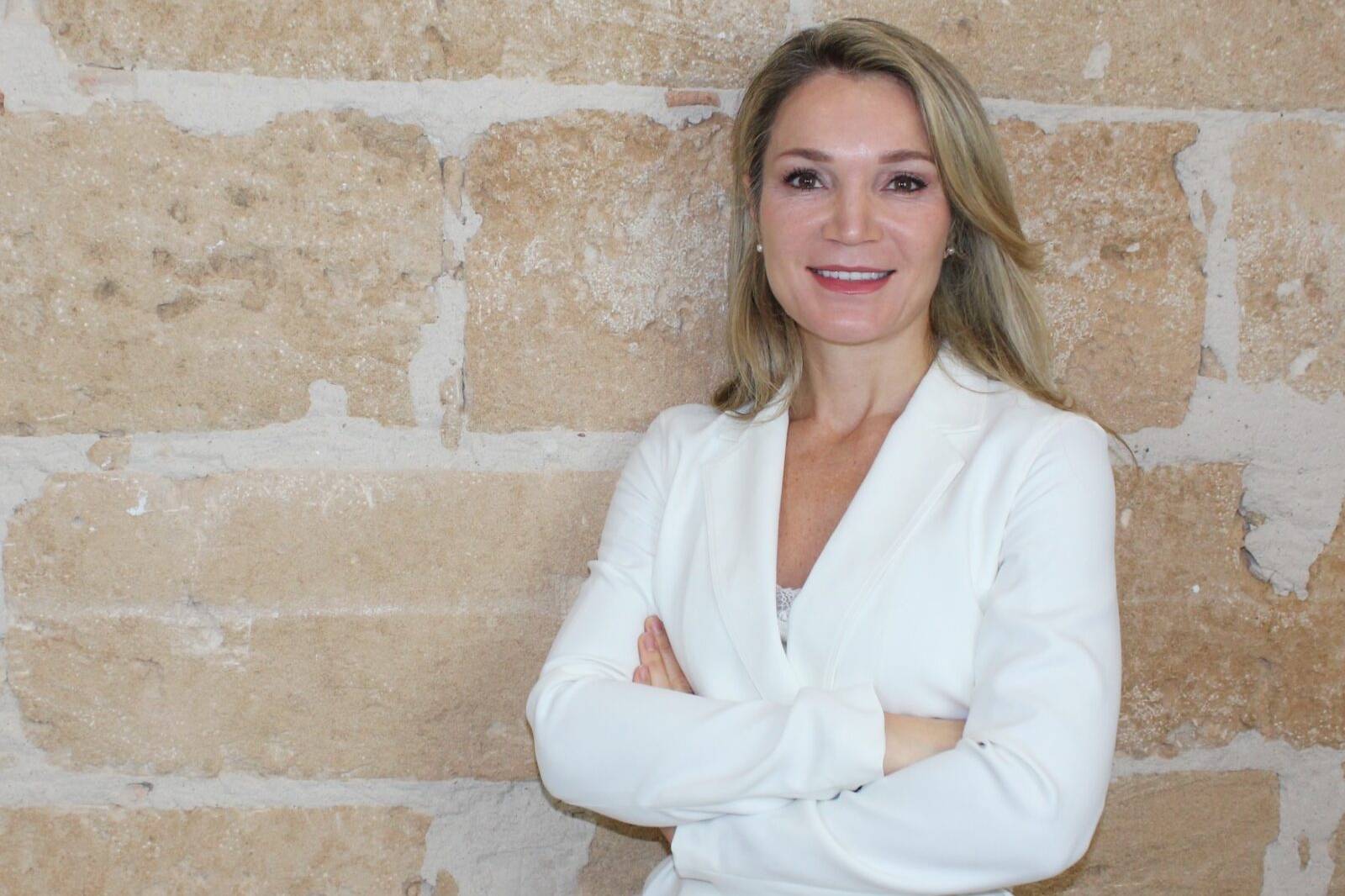
Dr Mariana Ostrerova, known to her patients as “Dra. Mara”, is a specialist in plastic and aesthetic surgery as well as orthopaedics and trauma surgery. After more than six years of specialist training in Germany, she worked as a senior consultant in plastic, aesthetic and hand surgery at St. Agatha Hospital in Cologne. Today she runs her own practice, Mara Aesthetics, in central Palma de Mallorca (Via Roma 6). She is a member of the German Society of Plastic, Reconstructive and Aesthetic Surgeons (DGPRÄC), the International Society of Aesthetic Plastic Surgery (ISAPS) and the Spanish Society of Plastic, Reconstructive and Aesthetic Surgery (SECPRE). She consults in English, German, Spanish and Russian. Her principle: honest advice, clear limits and alternatives, and natural-looking results.
This guide is for general information and does not replace a personal medical examination and consultation.